TL;DR
- Pixie Chess burns pieces to enter tournaments with ETH prizes.
- Paradigm leads a 5.2 million dollar seed round for development.
- Players destroy tokens permanently, creating scarcity and increasing value.
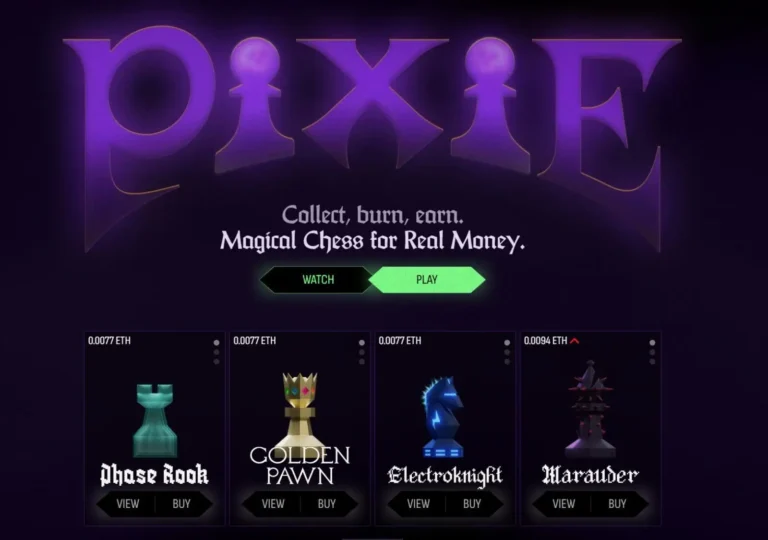
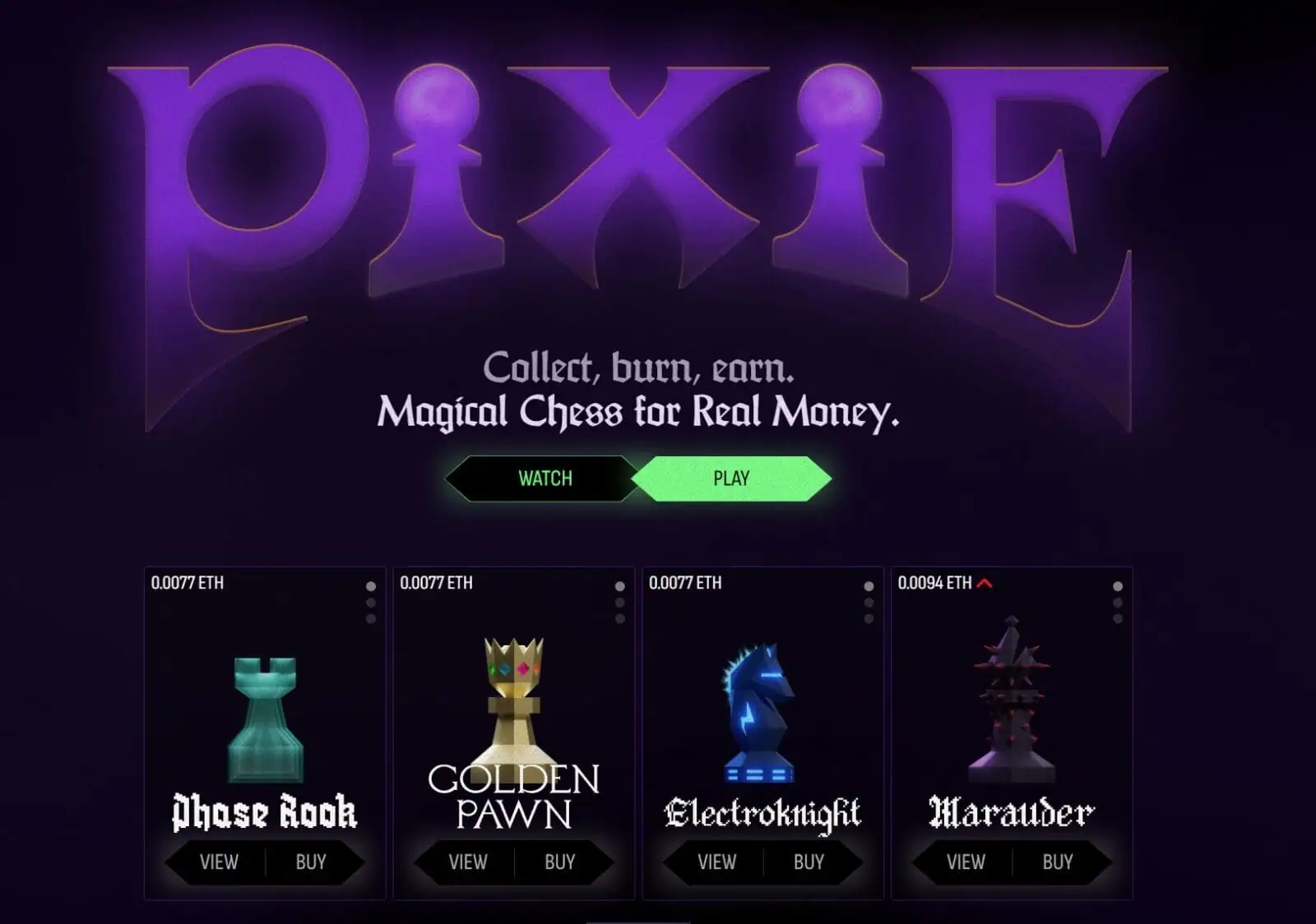
Strategy games on blockchain usually suffer from the same flaw: simple mechanics disguised as financial promises. Pixie Chess breaks that trend. The newly launched title combines classical chess with elements from collectible card games.
Each match allows players to use tokens with unique abilities. Players buy, sell, or burn these pieces to enter tournaments. The result is a layer of strategic depth that traditional chess does not offer.
Josh Harris, the game’s creator and Entrepreneur in Residence at Paradigm, designs Pixie Chess as a financial experiment inside a millennial intellectual competition. The proposal does not merely add cryptocurrencies as an afterthought. Instead, burning pieces to compete permanently alters the available supply. A rook that disappears from circulation never returns. A bishop with a special ability becomes scarcer each time players use it in tournaments.
The Pixie Chess Vault is now 82.95 ETH
All of it is allocated to tournament prize pools. pic.twitter.com/fF1ZHjMGnU
— Pixie Chess (@PixieChess) April 3, 2026
The prize pool starts at 82.95 ETH, an amount exceeding 250 thousand dollars at current exchange rates. The breakdown shows 34.39 ETH from piece sales and 48.56 ETH contributed directly by the development team. Said pool does not remain static. Each new tournament, each burned piece, each auction purchase feeds the fund. Players compete not only for strategic glory but for a real economic reward.
A 5.2 million dollar backing led by Paradigm
The financial backing behind Pixie Chess speaks to its ambition. Paradigm leads a 5.2 million dollar seed round. SeedClub and angel investors including Adam, Jordi Hays, and Trevor McFedries complete the support panel. No project without a solid gameplay foundation secures that level of funding. The money allows Harris to hire developers, balance designers, and UX experts.
The creator’s prior experience also matters. Harris works as Entrepreneur in Residence at Paradigm, a firm that invests in crypto projects with clear theses. The thesis here is direct: take a millennial game with immutable rules and add an economy of scarcity controlled by the players themselves. Chess does not change its moves.
The queen still moves diagonally and horizontally. The king does not abandon its square. What changes are the pieces as assets: each has a cost, a special ability, and a final destination when someone burns it to compete.
Furthermore, the game introduces daily auctions and packs of new pieces. Players decide how much to pay for a knight that shoots lightning or for a pawn that moves two squares backward. Supply and demand shape the meta in real time. A piece that proves too powerful appears frequently in tournaments. Players burn it repeatedly. Its number decreases. As a result, it becomes more expensive in auctions. The cycle feeds itself.
Burning pieces to enter tournaments: the economic heart of the game
The central mechanic of Pixie Chess deserves separate analysis. Players must burn pieces to participate in tournaments. Burning means destroying the token permanently, removing it from circulation forever. No wallet ever owns that specific piece again. No auction recovers it. The act raises the psychological stakes: losing a tournament hurts more when one also lost a valuable piece to enter it.
In fact, the design resembles poker tournaments with a buy-in, but with a key difference. In poker, the buy-in money adds to the pot and someone wins it. In Pixie Chess, the burned piece disappears without any player receiving it as a prize. The piece’s value transfers to the tournament pot only indirectly because the resulting scarcity can increase the value of the remaining pieces. The economy resembles that of collectible items with limited editions.
Additionally, the development team injects 48.56 ETH directly into the prize pool. That amount does not come from piece sales or commissions. The studio puts the money from day one to incentivize participation. An 82.95 ETH prize pool attracts competitive players who would normally ignore a crypto game. Many titles in the sector launch their token without a real prize pool. Pixie Chess does the opposite: it builds the pool before asking players to burn their assets.
A financial experiment or a real game?
Josh Harris describes Pixie Chess as both. The game part sustains itself. Chess rules require tactical thinking, anticipation, and control of the board’s center. Adding special abilities to pieces does not eliminate those demands. A player who does not know how to move a knight still loses, even if their knight shoots fireballs. The additional layer of tokens with abilities only multiplies options without replacing the strategic foundation.
The financial part, however, introduces new risks. A player can buy an expensive piece, burn it to enter a tournament, and lose in the first round. The result is a double loss: defeat on the board and the loss of the piece’s value. The game punishes overconfidence with economic harshness. No participation rewards or consolation tokens exist. Winning the tournament returns the multiplied buy-in. Losing means saying goodbye to the burned piece.
Therefore, the player profile that succeeds in Pixie Chess combines chess skill, risk management, and knowledge of the piece market. A chess grandmaster without financial education burns valuable pieces in tournaments where they have no advantage. An experienced trader without board skill buys expensive pieces and loses them in early rounds. Only those who master both areas obtain sustained profitability.
The game launches its proposal at a moment when crypto games desperately seek a real use case. Digital collectibles without utility collapsed in 2022.
Play-to-earn games turned into bot farms
Pixie Chess bets on a different path: utility through active scarcity. Players do not earn tokens by hanging around. Players burn value to create the opportunity to win more value. The model demands sacrifice, not just presence.
Harris summarizes the vision with a phrase: “Think Pokemon and Magic: The Gathering merged with chess.” The mix sounds eccentric on paper. In practice, daily tournaments, auctions, and piece burning create a decision loop that no other strategy game offers today. Chess provides the intellectual depth.
Collectible cards provide variability and a marketplace. The blockchain provides verifiable scarcity. Every burned piece registers forever. Every tournament has a transparent pot. Every transaction occurs without intermediaries.
The challenge for Pixie Chess will be maintaining interest after the first months. The novelty of burning pieces attracts the curious. The real difficulty of chess filters out opportunists. The balance between casual players and serious competitors will define long-term success. A game where only experts win drives away newcomers. A game where anyone can win without skill dilutes the value of rare pieces.
For now, the 82.95 ETH prize pool and the 5.2 million in funding place Pixie Chess in a privileged position. The team has the resources to iterate, adjust ability balance, and add new pieces each week. Players have a real economic incentive to learn chess and study the marketplace. The fusion between the millennial game and decentralized finance is just beginning.